
Perfect form in the bench press keeps you safe and in the game. Proper form is key to avoiding those pesky injuries and also for cranking up your performance.
Bench pressing is more than just pushing weight up. It’s a symphony involving the chest, shoulders, triceps, and even your back muscles. Understanding which muscles are in play can give you insight into what to feel during the lift and how to harness your body’s potential better.
A warm-up isn’t just a nice-to-have. It’s essential for getting your shoulders and joints ready. Imagine it as waking up your muscles, especially the rotator cuff, before the big show. Dynamic stretches and light movements elevate blood flow and get those shoulder blades moving smoothly.
Start by rolling your shoulders back and down, engage the lats, maybe even throw in some arm circles or band pull-aparts to get those muscles firing. These little tweaks ensure your joints are mobile and less prone to injuries during heavy lifts.
Protect and Defend: Guarding Your Shoulders and Spine
Getting your shoulder blade position dialed in is the first key to protecting yourself on the bench. Think about squeezing your shoulder blades together, almost like you’re trying to hold a pencil between them. This action creates a solid foundation on the bench and reduces unnecessary strain on your shoulders.
When you push those shoulder blades back and down, it’s not just a move—it’s your fortress of safety for your shoulders. With your back fully engaged, you’re shielding one of the most injury-prone areas of your body.
It’s easy to be tempted into over-arching your back during heavy lifts for that extra boost of power. But be careful—what feels like a good idea might lead to discomfort or injury in your spine if overdone. Aim for a natural arch that supports your lower back without forcing it into an extreme position.
The consequences of ignoring proper scapular and back alignment can be serious. From nagging shoulder aches to more severe injuries like rotator cuff tears and spine issues, following these practices can mean the difference between lifting strong over the years or ending up on the bench for good for all the wrong reasons.
Precision in Motion: Optimal Elbow and Grip Techniques
When you’re working on your bench press, your elbow and grip techniques are on the front line. Finding that sweet spot between 45 and 70 degrees for your elbows can be a game changer. It keeps your rotator cuff in check and channels the power where you need it without risking damage.
Your grip is what literally connects you to the bar. If it’s too wide or too narrow, you’re putting extra stress on your joints. Shooting for a grip that’s just beyond shoulder width tends to be the safest bet. You’ll feel more in control, and your shoulders will thank you by staying injury-free.
Now, let’s chat about bar path. You don’t want it coming down in a straight line to your neck or chin—talk about stress on your shoulders! Instead, aim for that lower chest or nipple line. That way, you’re ensuring everything follows a path that’s in sync with your natural biomechanics.
Mistakes like flaring out your elbows too much or gripping the bar like you’re hanging on for dear life do more harm than good. They mess up your form and set you up for injury risk. Remember, precision isn’t just about looking good; it’s about lifting smart and staying healthy.
Stability and Security: Building a Safe Lifting Environment
Grounding yourself with a solid feet placement can never be overrated. Plant your feet flat and keep them firm on the floor. This foundational stability is what helps you generate power and push that weight effectively.
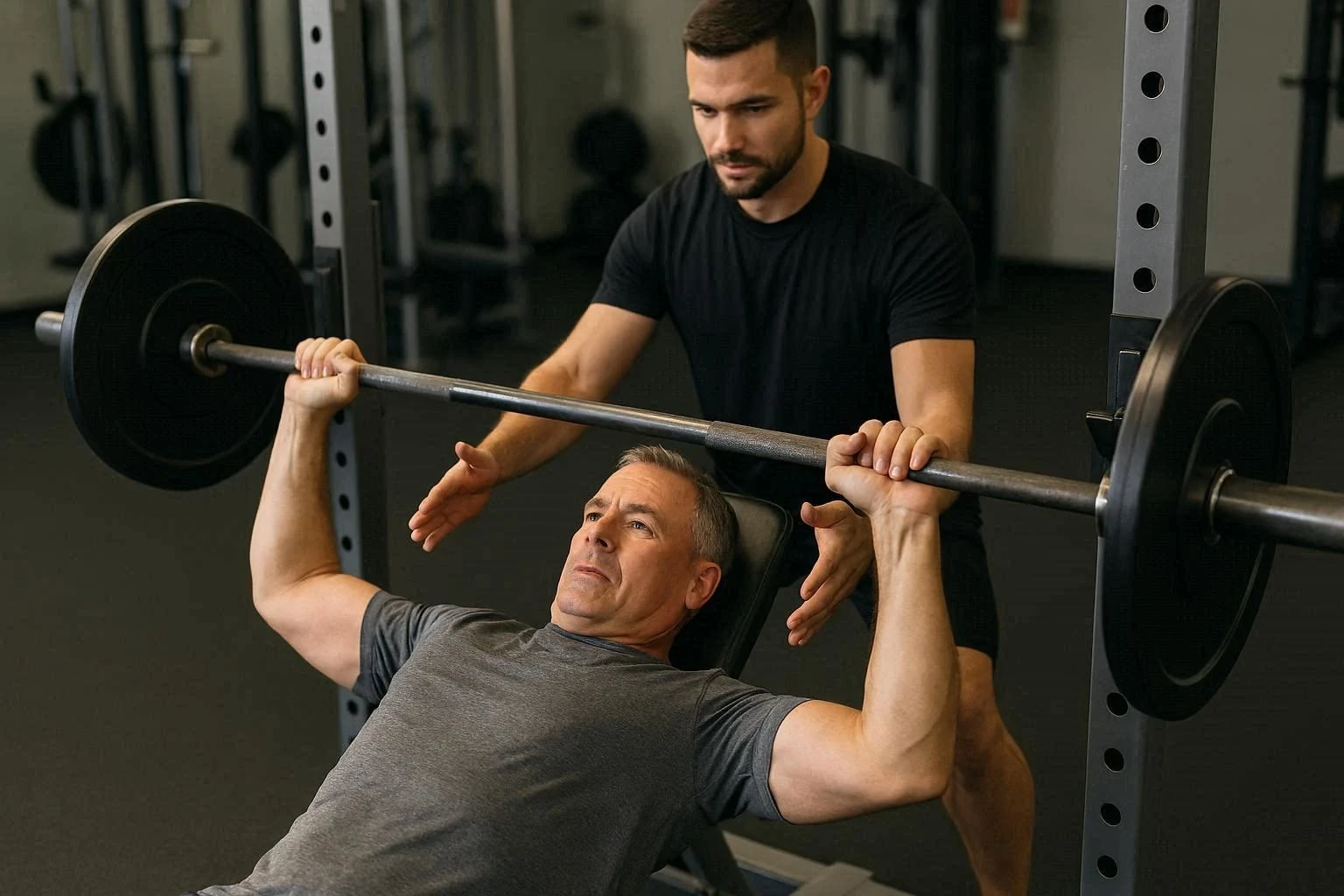
A spotter isn’t just for beginners. Even pros need one, especially when going for those challenging weights. Having a spotter or using safety bars gives you an extra layer of security if things don’t go quite as planned.
Bouncing the bar off your chest might seem tempting when you’re struggling, but it’s risky business. It can lead to serious injuries like pectoral tears. Instead, focus on a controlled descent, lowering the bar with care to keep things safe and sound.
Think of your safety strategies as a complete package: proper form, good technique, and precautions like spotters. These components of bench pressing aren’t just important—they’re essential for making sure your lifting journey is both long and successful.