
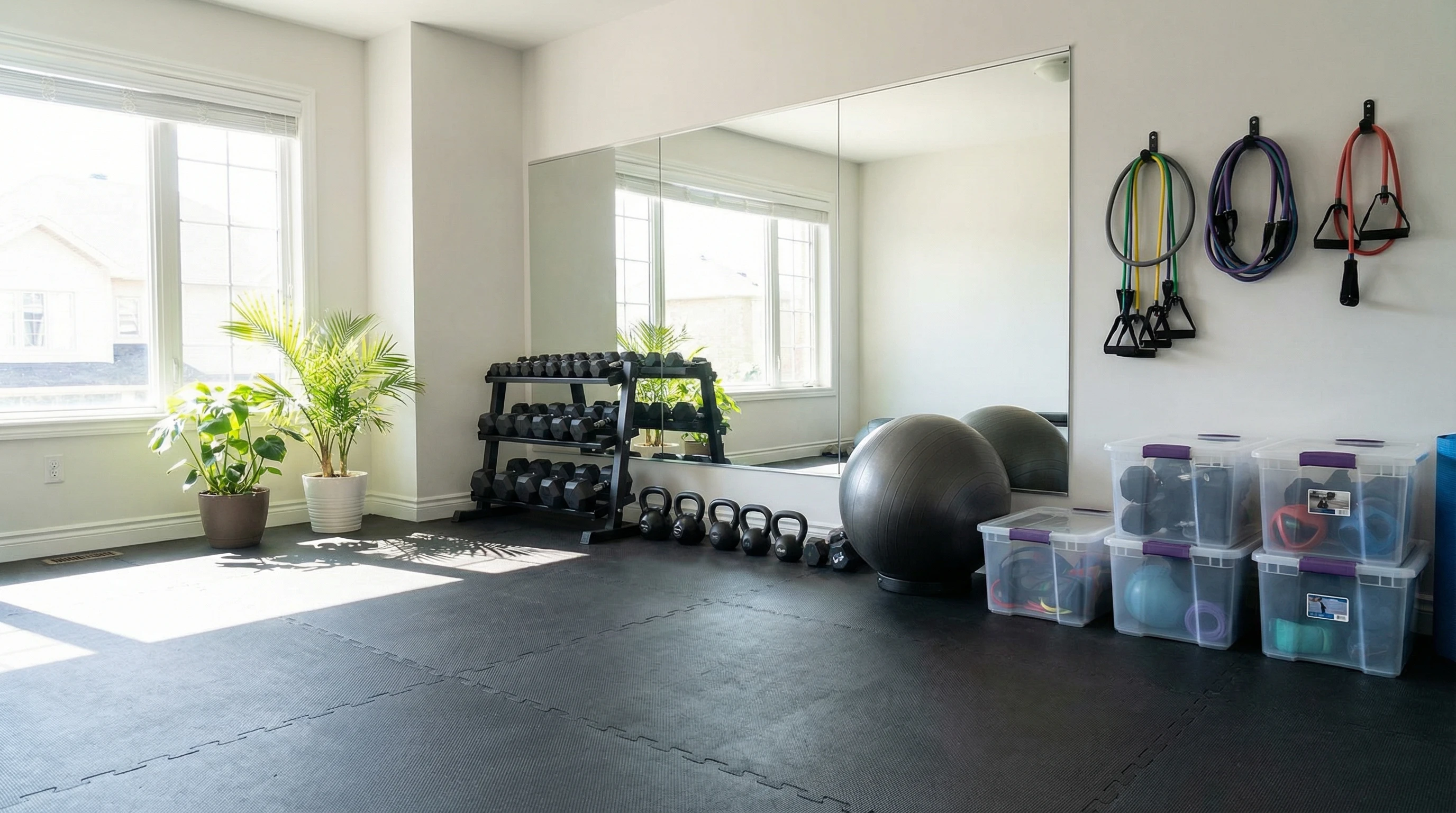
 Setting up a safe workout space at home is honestly one of the smartest moves for anyone aiming to make exercise a regular habit. Having your own spot means convenience, privacy, and flexibility. Still, you have to make sure it is safe, comfy, and inviting or you will end up finding excuses not to use it.
Here’s my playbook for creating a workout area at home that makes it easy to stay active without any extra stress. These steps are based on my own experience, and I’ve helped plenty of friends do the same, even with small spaces or a limited budget.
1. Picking the Best Spot at Home
Find an Open, Unused Area
I always start by checking out those corners or rooms at home that nobody really uses. Think basements, that awkward corner of the living room, or a spot in an insulated garage. What you want is an area that’s away from the usual foot traffic, so workouts aren’t interrupted by people walking through or kids running around. Choosing a space that is slightly isolated can also give you more privacy and focus.
- Look for a space not right next to bedrooms. Neighbors and family members will thank you for the quiet if you work out early or late.
- Aim for somewhere you can at least stretch your arms out wide and do a few lunges without bumping into anything. If you share your home with others, consider if there’s a door you can close for extra peace.
Map Out Your Layout
Once you’ve picked your area, grab a tape measure and check the exact amount of usable space. Drawing a rough layout, either on paper or with a simple room planning app, can help you make the most of every inch. Place your essentials and leave enough open floor for exercises like situps or yoga. Marking the floor with masking tape can help you visualize.
2. Prepping and Cleaning the Area
Clear and Deep Clean
It is really important to give the space a full reset. Move out boxes, old furniture, and anything you do not need. Grab some cleaning supplies and go over the floors, corners, and window sills; the fresher it feels, the more you will actually look forward to being there.
- If you want a mood boost, adding a fresh coat of lightcolored paint can really brighten up the vibe and make the room look bigger. Try to keep windows accessible so you can air out the space as needed.
Pick the Right Flooring
Slippery or hard floors are no fun for any workout and can even lead to injuries. I prefer rubber flooring or interlocking foam tiles. They are easy to lay down and great for absorbing sound while protecting your original floors, especially if you plan on jumping exercises or using weights. Padding also helps reduce fatigue on your joints.
- Horse stall mats are pretty popular for home gyms. They are durable, cost effective, and offer solid cushioning for both cardio and lifting weights. You can cut these mats to fit oddly shaped spaces, making them very adaptable.
3. Choosing Your Equipment
Start Simple
You do not have to drop a ton of cash on fancy machines. I recommend picking up a few basics:
- Yoga or exercise mat (nonslip and comfortable for floor moves)
- Dumbbells or adjustable weights
- Resistance bands (super versatile for fullbody workouts)
- Jump rope (a classic choice for quick cardio)
- Exercise ball (perfect for stability and core work)
These essentials can be stored easily, and you can mix them into various routines depending on your goals. If you want to make it more challenging later, you can add ankle weights or a kettlebell as you go.
Go Bigger If You Want
If there is room in your budget and space, machines such as a treadmill, stationary bike, or rowing machine fit nicely. Multiuse options, like a foldable bench or a compact cable resistance system, can also help save both space and money. Rowing machines offer fullbody workouts and fold away when not in use. Before purchasing any larger equipment, check online reviews and, if possible, try the machine at a local gym to make sure it suits your needs.
- Always measure to be sure new equipment will fit comfortably and leave enough wiggle room around it for moving and stretching.
4. Creating a Safe and Motivating Atmosphere
Good Lighting and Fresh Air
Lighting and air circulation make a bigger difference than most people think. I always aim for natural light when possible, but bright LED lights work well for basements or garages. A well-lit space keeps you energized and focused. Toss in a fan or open a window to get rid of stuffiness and help you stay cool, especially during HIIT or cardio. For winter, a small space heater can make workouts more comfortable.
Mirrors and Decor
I am a big fan of wall mirrors. Aside from making the space look larger, they help me check my form to avoid injuries. If you want, stick up an inspiring poster or add a plant for a pop of color and positivity. Motivational quotes or a whiteboard with your goals also give your space extra character and drive.
Easy Organization
Clutter is the workout motivation killer. I use bins, wall hooks, and affordable storage racks for weights, mats, and bands. A small shelf or cart for towels and cleaning wipes is pretty handy too. Storing things off the floor keeps your workout space safe and easy to move around in.
- A device holder on the wall or shelf helps you follow along with workout videos handsfree. A Bluetooth speaker or smart display can also help if you like working out to music or classes.
5. Safety Tips for Your Home Workout Space
- Keep the space totally clear of tripping hazards such as shoes, cables, or loose rugs.
- Doublecheck that all equipment is in good shape before using it, especially resistance bands and weights.
- Stick to nonslip mats if you plan to do any jumping or quickmove routines.
- If you have kids or pets around, make sure dangerous equipment is stored out of reach.
- Do not overload storage racks or hooks; secure everything properly so nothing falls mid workout.
Avoid overfilling your area with gear. The more stuff you add, the more challenging it becomes to move around safely. Always keep emergency numbers and a first aid kit accessible, just in case.
6. Frequently Asked Questions
What if I am working with a tiny space?
Even with just a corner, you can do floor workouts, resistance band routines, and bodyweight exercises. Foldable mats and stackable bins work awesome in places such as apartments or shared rooms. Hanging organizers can help make the most of vertical space, while decluttering regularly keeps your workout area ready for action.
How do I keep my workout space from getting too hot or cold?
Use a fan or small heater as needed, and consider blackout curtains in summer to cool things down, or insulation panels in winter for chilly basements or garages. A dehumidifier can be useful in damp spaces, while an air purifier helps if you are sensitive to dust.
How often should I clean my workout area?
I clean mine once a week. Wipe down all equipment with antibacterial spray and sweep or mop the floors. This keeps things fresh and actually makes it a place I look forward to using. Sanitize frequently touched areas, such as weights and handles. Every now and then, air out the space completely for an extra freshness boost.
7. Quick Tips to Keep You On Track
- Set your gear out the night before so you are ready to go when motivation hits.
- Keep your space neat after each workout; it really helps you stick with the habit.
- Switch up your decor or playlist now and then to keep things interesting. You can add seasonal touches or rearrange your equipment if you feel your routine is getting stale.
- Try working out at different times of day to find when your energy is highest. Early mornings or quick lunchtime sessions can fit even the busiest schedules.
- Team up with a friend virtually or in person to share routines or new workout ideas. This social boost can make your workouts more fun and keep you accountable.
Having a safe, organized, and inviting workout space can make regular exercise feel less like a chore and more like a small luxury. Even just a few thoughtful changes can help you build a home gym that works for you and keeps you moving consistently. Remember, it’s about starting where you are and adapting your space as your fitness grows. Setting up your perfect home workout spot is a win for both body and mind, making fitness more accessible any day of the week.