
 Technology keeps moving forward, and it’s not just for the younger crowd. People over 50 are using smartphones and wearable tech more than ever. Fitness trackers and apps, once seen as high-tech gadgets for athletes, now offer some real perks for anyone looking to stay fit, manage health, and feel connected. I’ve noticed these tools making a difference for many friends and family members, and they’re definitely worth checking out if you want to maintain your health in a manageable way.
Even if you haven’t picked up a fitness tracker before, these devices and apps are easier to use than ever. Many come loaded with helpful features that go way beyond counting steps; you get tracking for things like heart rate, medication reminders, and even alerts to reach out to a loved one or healthcare provider if something seems off. So, if you’re curious about bringing a little high-tech help into your routine, there are a lot of good reasons to give these tools a try.
Here’s how fitness tech can help boost your wellness, manage daily routines, and possibly make life a bit simpler as you age. The options are growing—and there’s something for just about every need.
How Fitness Trackers and Apps Help People Over 50
One of the best things about current fitness technology is its ability to offer personal health and fitness suggestions. Fitness trackers and health apps collect information about your daily activity, quality of sleep, heart rate, and more. Based on that, you can set realistic goals and follow a plan that fits your life. Staying active tends to get more important as the years go by, and these devices really shine when it comes to encouragement and accountability.
A lot of folks over 50 are already comfortable using smartphones and tablets; about 71% now, according to Pew Research. With more people using tech, health-focused apps are easier than ever to pick up. Whether you’re a seasoned step counter or just getting started with technology, the interface and design on these tools usually make things pretty simple.
Everyday Benefits
- Personalized Workouts: Trackers and apps create exercise plans that match your fitness level and update as you progress.
- Activity Reminders: Regular nudges help keep you moving, which is super important for healthy aging.
- Chronic Condition Management: Reminders to take medication, track blood pressure, or log symptoms can make daily health management a lot easier.
- Staying Connected: Some devices let you quickly reach out to a family member or healthcare provider if something’s not right. That’s extra peace of mind, especially if you live alone.
These features make staying on top of health much less of a hassle. For example, medication reminders can help reduce the risk of missed doses. Activity nudges encourage you to keep moving, even if motivation dips. And of course, having heart rate and blood pressure logs at your fingertips may help doctors provide better recommendations during checkups.
Top Fitness Trackers for Older Adults
If you’re shopping for a fitness tracker, you’ll notice a bunch of choices. Some are big on simplicity, while others have advanced features for those who want a bit more detail. Here are a few options I’ve seen work especially well for people over 50.
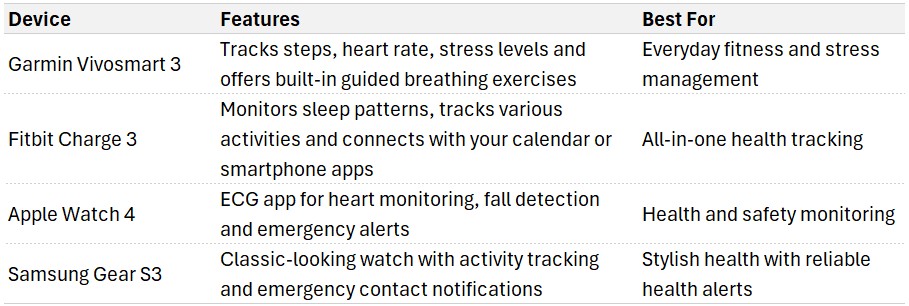
All of these give you the basics, such as step counts and calories burned, but they also have cool features like sleep analysis and reminders to move. The fall detection and emergency alerts on the Apple Watch 4 give a little added security for those who want peace of mind when out and about.
When choosing a tracker, think about screen size, battery life, and how easy it is to read and use. If vision or dexterity is a concern, picking a device with simple controls and a large, bright display can make things easier. There’s even a growing trend in making trackers more fashionable and less like “tech gadgets,” so you might find one that feels comfortable to wear daily.
Popular Fitness and Wellness Apps to Try
Beyond the physical trackers, there are plenty of health and fitness apps that you can install on your phone or tablet. Whether you’re walking, running, cycling, or just aiming to be a bit more active around home, there’s an app for your needs. Some even allow sharing your progress with friends or family, which is a great motivator.
- Runkeeper: Tracks run and walk distances, sends reminders, and keeps history neat and tidy.
- MapMyRun: Offers route mapping and distance tracking for walks, hikes, and more.
- Strava: Lets you compete with or encourage friends, great for motivation through group activity challenges.
Most health and fitness apps are easy to set up, and many are free or have free versions that fit most needs. Plus, the app store is full of apps for seniors, including ones to track medications and manage ongoing conditions like diabetes or high blood pressure. This kind of app support means you can build a personal toolkit as you go, even if you aren’t into gadgets or don’t want to spend much money.
Making the Most of Your Device: Tips for Getting Started
Starting out with new technology can feel overwhelming, but a lot of fitness trackers and apps are designed for easy setup. Here are some basic steps and tips that I’ve found very useful:
- Don’t Rush in: When you first open your tracker or download an app, start by customizing the basics: your age, height, weight, and typical activity level.
- Set Realistic Goals: Many devices give you starter goals, but it’s smart to tailor them to your current abilities. Maybe that’s 4,000 steps a day instead of 10,000.
- Use Reminders: Nearly all devices and wellness apps let you set gentle reminders to move, stay hydrated, or take medication.
- Connect with Loved Ones: Some trackers let you share progress or allow an emergency contact to get alerts, which is very handy if you have health concerns.
- Check Privacy Settings: Set app permissions carefully so you know who sees your information.
If you’re unsure about what settings to use or how to read your device, check the user manual or look up walk-throughs online. Getting help is easier than it used to be. Many brands have friendly customer support, live chat, and video tutorials to smooth the way or answer any questions that come up.
Challenges and Usage Trends
Fitness trackers and health apps aren’t exactly new, but as they get smarter, more people are using them. Even so, not everyone makes full use of what these devices can do. Around 20% of older adults use health apps to manage major conditions, even though almost 63% have at least one ongoing health challenge.
Some of the reasons people hesitate include:
- Cost: Some advanced trackers or paid app subscriptions can add up.
- Data Security: Concerns about privacy and sharing personal health information.
- Lack of Recommendations: Not getting advice from doctors or experts about which apps or trackers are best.
The good news: as technology gets more popular, insurance providers and health systems now often support or offer discounts on certain devices. More doctors are learning about and suggesting tech-based wellness plans, making it easier to get started with the right guidance. If you face any hurdles, asking your healthcare provider about tech options can help.
Moving Forward with Fitness Technology
Adding a fitness tracker or trying out a health app can feel like a small step, but it’s an effective way to get proactive about your health. These tools don’t just help clock your daily movement; they let you stay on top of medications, manage chronic conditions, and even help you connect with healthcare pros without leaving home.
Even if you’ve never used a fitness gadget before, tech today is more approachable than ever. Just a few taps and you’re tracking steps, sleep, and health stats. If you stick with it, the encouragement to keep moving or the reminder that it’s time for your next pill really adds up. It’s about finding the right combination of features that matches your lifestyle and health goals, no matter where you’re starting from.
Ultimately, fitness technology offers an easy way to keep health goals front and center. Whether you’re walking a few extra blocks or checking in with your doctor from afar, these tools are here to give a boost to your routine. Have you tried a tracker or health app? I’d love to hear what tech tools work best for you or any practical tips you have for others exploring these options!